contact France Today

Search France Today

Showing posts with label Rachida Dati. Show all posts

Tuesday, 15 November 2016

Rachida Dati’s “fascist, thug” 2013 text message to Brice Hortefeux

Well, it’s quite a while since either of these two French politicians has made the headlines.

But hey, here they are. Rachida Dati and Brice Hortefeux.

And what a handbags at dawn session they must have had when they were both frontline government ministers.

That’s if the text message sent by Dati to Hortefeux a couple of years ago (but revealed last week) is anything to go by.

It shows just how loving, friendly and understanding members of the same party and government can be towards each other.


Rachida Dati's text message to Brice Hortefeux (screenshot Mediapart's tweet)

Set the scene.

It’s September 2013.

And the former justice minister and current member of the European parliament and mayor of the seventh arrondissement of Paris (yes, wearing two political hats simultaneously - a very French tradition), Rachida Dati, whips of a text message to (take a deep breath…at least there’s some punctuation to allow you to respire while you’re reading) Brice Hortefeux, former interior minister and employment minister and also a current member of the European parliament and a councillor (and second vice president no less) for the recently-created region of Auvergne-Rhône-Alpes .

The two protagonists - both close to former (there’s evidently a lot this “pastness” going around) president (and wanna-do-it-all-over-again hopeful) Nicolas Sarkozy - clearly had what could be termed (politely) a “strained” relationship.

That’s going on the evidence of Dati’s SMS.


Rachida Dati (screenshot BFM TV September 2016)

The tone is set from the very opening words by Dati greeting Hortefeux with,“Salut le facho”!

And then continuing with a barrage of menaces such as revealing “the cash he had been given for a number of meetings involving Sarkozy without specifying what the money had been used for” and his “illegal employment of his wife at the European parliament”.

“Tu me fous la paix” (you can translate that for yourselves on one of the many online services, but it basically means “stop messing around with me” - but in a far more vulgar manner), Dati ends with a flourish, calling Hortefeux a “thug” and threatening once again that she won’t be fooled with.

Phew.

Thanks Mediapart - a French online investigative and opinion journal - for sharing that apparently “private” email with us. Good work.

And the reason for Dati’s vitriol? Apart from the fact that the former ministers clearly didn’t get along.

Well, once again, according to Mediapart, it was because she had got wind of Hortefeux’s  suggestion that her “air and border police privileges be stopped”.

Behind the scene advisers apparently managed to calm the two (mainly Dati) and the incident is now no longer either wants to remember…with Hortefeux admitting on BFM TV that “relations with his former government colleagues had been difficult at times, but the page had now be turned.”

For the moment?

Friday, 26 April 2013

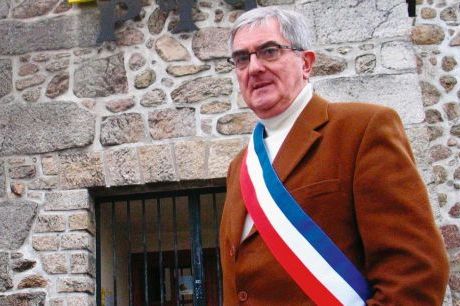
Jean-Claude Massiou, the French mayor who says he won't marry same-sex couples

The National Assembly has only just voted to allow same-sex couples to marry and adopt (and remember it still has to be approved by the country's Conseil Constitutionnel or Constitutional Council with opponents hoping their appeal will require the bill returning to parliament in a revised form) and already one mayor has said neither he nor any of his elected officials will respect the law.

Jean-Claude Massiou from the centre-right Union pour un Mouvement Populaire (Union for a Popular Movement, UMP) is mayor of the village of Abjat-sur-Bandiat (population 651) in the département of La Dordogne.

Mayor of Abjat-sur-Bandiat, Jean-Claude Massiou (screenshot from website 24Gay.fr)

True to his pre-vote stance when he campaigned against the bill, Massiou insists his views haven't changed, even after Tuesday's parliamentary vote.

If a couple of the same sex living his village ask to be married at the mairie, Massiou says he'll simply refuse "politely" and without any "aggression."

"It's not homophobia or anything," he told a local radio station.

"It's a matter of principle: marriage is between a man and a woman," he continued, seemingly ignorant of the fact that is no longer the case.

And Massiou doesn't seem particularly worried about the possibility of sanctions for breaking the law by discriminating against couples of the same sex and refusing to marry them; maximum three years imprisonment and a fine of €45,000.

"We"ll see what happens because there has been a precedent set when Noël Mamère (the mayor of the Bordeaux suburb of Bègles) conducted a marriage ceremony for two men (in 2004)."

"It wasn't legal (or recognised) but no action was taken against Mamère."

Maybe Massiou should take a leaf out of a fellow UMP mayor (and one who's slightly better-known) Rachida Dati.

She is of course a former justice minister - the position currently held by the woman who had to steer the bill through both chambers of parliament, Christiane Taubira

Just like Massiou, Dati was an outspoken opponent of the bill before it passed but knows how to accept defeat gracefully (well, in this case at least).

Invited on to Wednesday's lunchtime news magazine on Canal + "La Nouvelle Edition" to explain why she had decided to pull out of the race for her party's nomination for mayor of Paris, Dati was also asked to comment on the previous day's vote.

And in particular whether she would, as mayor of the 7th arrondissement of Paris, marry couples of the same sex.

"I'm an elected official and the law has been passed by parliament although it still has to be enacted," she said.

"I represent an arrondissement where there are many opponents to same-sex marriage, but just like them, I shall respect the laws of the republic."

Are you listening M. Massiou?

Perhaps you should follow Dati's example and instead concentrate on organising the event for which your village is apparently better known - the annual French National Conker Championships.

Veuillez installer Flash Player pour lire la vidéo

Monday, 23 July 2012

Incomplete political faction - and what if there were a Royal coup within the UMP?

Have you noticed how much the centre-right opposition Union pour un Mouvement Populaire
(Union for a Popular Movement, UMP) is coming to resemble the Socialist party of just a few years ago.

Ségolène Royal (screenshot from TV report after Socialist party primaries)


The reference is not of course to political ideology but in terms of the internal power struggle which is set to heat up.

There's a race for the vacant position of party president, due to be elected in November, and already a slew of candidates - former ministers in the main - have let it be known they're interested in the post either as a way of uniting the party or making a stab at a run for the 2017 presidential elections - or both.

(With former positions in brackets) the front runners are likely to be François Fillon (prime minister) who has already declared he's a candidate, and the party's current secretary-general Jean-François Copé, who's not yet officially announced his decision but has already begun campaigning.

At the weekend Nathalie Kosciusko-Morizet (ecology) said she would be a candidate joining Bruno Le Maire (agriculture) in the hunt for the 8,000 party signatories necessary to be eligible to stand.

The mayor of Nice and most definitely orange-faced one, Christian Estrosi (industry) is "not excluding" the possibility and neither is Rachida Dati (justice) who, even though she supports Copé and can't stand Fillon, has mooted the idea of a possible trio of women sharing the post.

Xavier Bertrand (employment) is apparently giving himself until the autumn before he comes up with a decision and François Baroin is also reportedly contemplating more than his just navel.

And if the choice for party activists were not already difficult enough, word on the grapevine is that they'll have a perhaps royally unwelcome presence among the starters.

Because a veteran of past battles ingloriously lost is thought to be considering entering the fray.

Yes you've guessed it. Some have suggested that Ségolène Royal will make a stab at yet another political office - a move which could very well put the proverbial cat among the pigeons and see UMP activists rally behind anyone who might save the party from a fate worse than the recent two electoral defeats.

Seggers to run? Surely a joke - you might be thinking.

Well it might be something of a stretch, but take a look at her record of campaigning and the idea doesn't sound so ridiculous, does it?

In 2007 she was the Socialist party's candidate in the presidential elections of that year, having, against all odds, secured the support of a majority of the party's rank and file members.

Sadly (or not) the party apparatchiks weren't so enthusiastic (and nor was the electorate at large it transpired) lobbing the political equivalent of a Molotov cocktail at every turn in the form a none-too discreet "Tout sauf Ségolène" campaign - an element that was to become something of a leitmotif within the party.

Never one to lie down after defeat, Seggers turned her attention towards the leadership of the Socialist party a year later, leading a bitter campaign against the eventual winner, Martine Aubry, whom she accused of having won an election characterised by "fraud and cheating."

Ho hum.

An attempt to secure the party's nomination as its candidate in this year's presidential elections ended in tears as Seggers finished a distant fourth after the first round with just 6.5 per cent of the vote.


And most recently there have of course been yet more tears as she struggled to put on the bravest of faces after coming under the Tweet-powered attack from the minister of jealousy, Valérie Trierweiler, during her unsuccessful attempt to land a seat in the national assembly.

Yes Seggers is battle-hardened but far from weary and surely ready for anything the UMP might be able to throw at her, including a former ally and advisor, Éric Besson.

He was on her 2007 campaign team but "defected" to the other side just a few months before the election having decided that her economic programme was flawed and the (Socialist) party not ready for power.

Ah yes, the beauty of French politics; Besson once an advisor to Royal and a member of the Socialist party, changed camps, joined the party of Nicolas Sarkozy, and became immigration minister to a man whom he had once described as "a US neocon with a French passport”

So who's to say that an unsubstantiated rumour about Segger's intents couldn't in fact become reality?

Stranger things have happened.

Just for the record, although there is a certain amount of "fact" in this piece, there is also a(n) (un)healthy dollop of "fiction".

Much like French politics really.

Tuesday, 3 July 2012

François Hollande's "gender parity" government? Yes and no

The gloves are off in the battle for control of the centre-right Union pour un mouvement populaire (Union for a Popular Movement, UMP) party, and former justice minister Rachida Dati has chosen to throw her two centimes-worth into the ring.

No, she hasn't exactly declared herself a candidate for the post, which will be decided at the party's conference in November but, in her usual candid style which leaves the door wide open to interpretation, hasn't denied her interest in the job either.

"Why not?" she replied when asked the question recently in a radio interview.

"Collectively there are several of us. So why not?"

Hmmn most revealing, isn't it?

Was she talking about several women joining forces to lead the party forwards?

Or perhaps she was borrowing something from the more diplomatic proposals from a former prime minister and current Mayor of Bordeaux Alain Juppé that there should be some sort of joint presidency to prevent infighting splitting the party.

Anyway, with Dati's arch enemy and former prime minister François Fillon having already announced he's standing and the party's current secretary general Jean-François Copé clearly in campaigning mode, November looks as though it could be a real handbags at dawn affair.

As for Dati's precise intentions? Well remember this is (French - although it's probably not so different elsewhere) politics where allegiances are built on the proverbial shifting sands and personal ambition often rides roughshod over ideology or the common good.

So Dati, although equally as firm in her support for Copé as she is for her dislike of Fillon,  probably wouldn't mind positioning herself for a run at the Really Big One if the opportunity presented itself, is keeping her options open.

The most prominent element missing from any party battle in November will most likely be exactly what Dati and many other female politicians bemoan - the presence of a woman in the race.

Ah yes. Women in French politics - they get a pretty rough deal.

How many can you name for example (without resorting to Google)?

From the Socialist party, which currently holds all the country's major offices, how many come to mind immediately apart perhaps from the usual high profile suspects such as Ségolène Royal and Martine Aubry.

After that it gets kind of tough doesn't it?

And what about that apparent balance between men and women in the government, so highly touted by the French president François Hollande and his (male - just in case you needed reminding) prime minister Jean-Marc Ayrault?

Family photo - Jean-Marc Ayrault's first government (screenshot BFM TV)

Oh yes there's the same number of men (19) and women (19) and many have held that up as an example of Hollande succeeding where his predecessor, Nicolas Sarkozy, so obviously failed.

But, as has also been pointed out several times, the jobs haven't exactly been shared out equally when it comes to the pecking order.

Take a look at the so-called "top jobs" (for want of a better expression) for example; the foreign minister - Laurent Fabius, the interior minister - Manuel Valls, the defence minister - Jean-Yves Le Drian and goodness, the justice minister - Christiane Taubira. A woman!

One out of four. Not bad.

Certainly ain't real parity though, is it?

Clearly there weren't enough qualified women to go around for those positions.

Marisol Touraine (social affairs and health), Aurélie Filippetti (culture and communication) or Delphine Batho (ecology, sustainable development and energy) certainly aren't going to kick up a stink about the portfolios they've been given at some equally important but arguably less prestigious ministries.

But Ayrault (and Hollande) surely limited their choice by plumping for women who were parliamentarians - from the National Assembly or the Senate.

And therein lies part of the problem for any real gender parity in government - at least in France.

The last election returned the highest number of women to the National Assembly the country has ever seen.

That's the good news folks.

But when you look at the actual figures, you discover a different story.

Of the 577 députés, a whopping 155 were women.

All right that was up from the 109 of the 2007 elections but it still only accounts for 27 per cent of those elected to the National Assembly.

Progress - very slow progress - which will see France rise from 70th in a table of women members as a percentage of the total number present in the country's lower house to 36th - nestled just between Afghanistan in 35th and Tunisia in 37th.

Still at least that's better than the UK down in joint 55th with Malawi.

Maybe there's something after all to the much-quoted comment by the late journalist and politician Françoise Giroud that there'll only be real gender parity in politics when "a woman is appointed to office on the basis that she is just as incompetent as a man."


Les nouveaux ministres posent pour la photo de... par BFMTV

Friday, 1 June 2012

Xavier Bertrand's slip of the tongue "in defence" of Fat Cat salaries

Ah what would the world be without the occasional political gaffe?

The previous centre-right led Union pour un Mouvement Populaire (Union for a Popular Movement, UMP) government was full of ministers capable of delivering a howler or two.

Former justice minister Rachida Dati proved herself to be adept at unintentional sexual references when speaking of "oral sex" ("fellation") rather than "inflation" during an interview on foreign investment funds.

Her slip up made the subject so much more...er...interesting.

And on another occasion she managed to introduce "dildo" ("gode") rather than "code" (of conduct) into an interview about  laicity and Islam.

Dati wasn't alone of course. There was also Frédéric Lefebvre the (wait for it) junior minister for trade, small and medium enterprises, tourism, services, liberal professions and consumption (where was the kitchen sink?) who showed his literary prowess when asked which classic French work had made the biggest impact on him.

Sadly Lefebvre came up with the ready-to-wear clothes company "Zadig ET Voltaire" rather than "Zadig BY Voltaire.

And let's not forget Nadine Morano (who could?) when...well, she said just about anything that came into her mind or struck her fancy but perhaps the most memorable was  confusing "Renaud" the singer and "Renault" the car manufacturer.

Mary Hopkins time:

                        "Those were the days my friend,
                        We thought they'd never end."

The new government hasn't quite got into its stride yet, but that doesn't matter.

The new opposition - or the former government if you like - is proving itself to be well up to the job of maintaining a strangehold on the art of delivering a lapsus linguae.

More on than in a moment.

First some background.

The recently-elected French president, François Hollande, is on something of an exemplary cost-cutting exercise.

One of his first decisions was to reduce ministers' pay by around a third.

It was a campaign promise and one he "made good on" as soon as the new 34-strong government was named.

Next up is the pledge to cap the salaries given to the big cheeses of companies which are state-controlled or, in the case of nuclear power plant builder Areva or utility giant EDF, it still has a majority stake.

The government is apparently still working out the fine print but is expected to announce in mid-June that top company executives' pay will be limited to 20 times that of the lowest paid worker.

An end, in part, to the so-called fat cat syndrome in companies such as EDF (84 state-owned) where CEO Henri Proglio reportedly earned a miserly €1.6 million in 2011.

Of course some might try to argue that setting a "maximum salary" will make it difficult for state-owned companies to attract top talent and it'll be nigh on impossible to impose on the private sector.

But few could argue against the injustice that exists between some top earners and those at the opposite end of the scale.

Well that's unless you happen to be a Xavier Bertrand, the former minister for labour, social affairs and solidarity in the last government under prime minister François Fillon.

Xavier Bertrand (screenshot Europe 1 interview)

Bertrand was the invited guest on Europe 1 radio on Thursday morning and perhaps revealed a little more than he intended - albeit by means of a slip-of-the-tongue - about the thinking behind the previous government's attitude.

"I've always been in favour of excessive salaries (for top executives) " he told journalist Jean-Pierre Elkabbach.

"I said as much when I was a member of the previous government and I'm not going to change my mind now."

Elkabbach, seasoned journalist that he is, interrupted just to make sure he had heard correctly and in so doing allowed Bertrand to correct his mistake.

"Always in favour of excessive salaries?" questioned Elkabbach.

"Ah certainly not," replied Bertrand calmly, realising his error.

"I've always been in favour of limiting excesses (of payment)," he said.

"Whether it's in a period of crisis or not, it's always necessary to set a good example."

Ah, it's so good to hear and see that some things about the UMP haven't changed.

Friday, 25 May 2012

Rachida Dati hits out at François Fillon - surprise, surprise

The former justice minister Rachida Dati has never exactly been best buddies with the now ex-prime minister François Fillon.

In fact it probably wouldn't be too far off the mark to say they share a mutual dislike for each other - and they aren't afraid to show it.

So Dati's attack on her former boss over his statement that after the defeat (and apparent departure from political life) of Nicolas Sarkozy there was no natural leader in their centre-right Union pour un Mouvement Populaire (Union for a Popular Movement, UMP) party hardly comes as a surprise.

Rachida Dati (screenshot BFMTV-RMC radio)

Fillon's comment was without doubt a salvo fired in the direction of the party's secretary general Jean-François Copé and a means for him to set himself up as a potential successor.

But it was too much for Dati who, not mincing her words, was more than willing to give her take on what he had said when she interviewed by Jean-Jacques Bourdin.

"Unpleasant", "disloyal", "ungrateful" and "bad-mannered" were just a few of the choice terms she used to describe Fillon's statement.

"He (François Fillon) appears to be a little ungrateful vis-à-vis Nicolas Sarkozy who made him what he is today," she said.

"I don't think it's very chic (an attribute which is of course very important to Dati - in all senses of the word)," she continued.

"We tell our children to be well mannered and to get a good eduction. This is simply rude in relation to Nicolas Sarkozy. He's not dead is he?"


Of course this isn't the first time the two have locked political horns - so to speak.

Even though she has thrown in the towel after the UMP parachuted in Fillon to stand for a safe for Parisian seat (and one she coveted) in the upcoming National Assembly elections, Dati is clearly still smarting.

And this is a woman who, love her or loathe her, you just can't and probably shouldn't ignore.

There's denying that she knows how to make and impact - and not necessarily for the right reasons.

During her time as justice minister she came in from opposition criticism for her inability to handle her portfolio and the reports of her ministry haemorrhaging staff were seen as an indication of a woman who was difficult to work with.

Glossy magazines had a field day, regularly featuring photographs of an elegant and stylish Dati only too happy to pose for the camera and of course the weekly satirical magazine Le Canard enchaîné was unrelenting in lampooning her.

The polemic (good word that - the French love it) surrounding her return to work just days after giving birth to a baby whose paternity of course was the subject of endless speculation.

Even when she was fired - whoops sorry, left the government to take up her seat in the European parliament in 2009, she didn't quite disappear from the domestic political scene especially as she had been elected mayor of the seventh arrondissement of Paris in 2008,.

From apparent exile in Brussels and Strasbourg  Dati has continued to make to make a splash, appearing on an M6 "fly on the wall" documentary in which she was less than complimentary about her new job.

She has popped up regularly on television - be it to explain the economics behind "fellation"  or later throwing a  "dildo" into a discussion on French secularism.

Both were bloopers of course, which she was able to smile about after the videos went viral and put down to the speed at which she speaks.

Always an ardent supporter of Nicolas Sarkozy, Dati was a brought back from duty in Brussels to accompany him during part of his campaigning, adding her own personal fashion statement late in the day by appearing on the early morning news magazine La Matinale on Canal + sporting a sweater with a design emblazoned on the back which to all the world (except Dati) looked to be that of a giant cannabis plant leaf.

Ah yes.

In what is likely to become a struggle for control of the party (after the elections), Dati knows exactly how to position herself and make the most of her undoubted media-friendly talent - albeit sometimes to her cost.

Expect more fun and games to follow.

Monday, 23 April 2012

Rachida Dati's post election cannabis fashion faux pas

So the first round in the presidential elections is over with French voters unsurprisingly choosing the Socialist Party's François Hollande to go head-to-head with the incumbent Nicolas Sarkozy on May 6

The media is now in post first round overdrive with analysis and interpretation of Sunday's results and speculation over the outcome in a fortnight's time.

As such, one of the invited guests on Monday morning's edition of La Matinale on Canal + was none other than Rachida Dati.

Rachida Dati (screenshot from Canal + La Matinale)

You remember her - the woman brought in to Sarkozy's government as justice minister at a time when diversity - both ethnic and gender - was his buzzword, and then when the honeymoon was long over, dispatched to the country's version of sending someone to Coventry (apologies to that UK city, but it is an expression) and made to stand in the European elections.

Having "served her time" without creating too much of a media stir in France, Dati was brought back into the fold as Sarkozy's official campaigning got underway.

And in spite of herself perhaps she has been something of a non-contraversial star in so far as she didn't draw too much attention to herself for off-the-cuff and misplaced remarks.

Well, let's face it, Sarkozy had Nadine Morano for that.

But the day after the night before - and things look to have gone a little wrong for Dati - at least in the vestimentary department.

On Monday she appeared on La Matinale, the breakfast show on Canal +, to put the inevitable positive spin on Sunday's results.

And as she was talking, answering questions put to her by journalist Caroline Roux, the camera kept showing her from the back.

Why?

Well emblazoned on the back of her top was a pattern which looked for all the world to be that of a giant cannabis plant leaf.

(screenshot from Canal + La Matinale)

La Matinale's presenter, Maïtena Biraben, couldn't resist asking Dati about it at the end of the interview and the least that can be said is that the former justice minister floundered.

"There have been several messages on our Facebook page wondering whether your top is smoking," said Biraben to a non-plussed Dati.

"So what is the design on the back of your top - Cannabis?"

Looking rather uncomfortable and probably realising how this could play out later in the day, Dati denied that it was a cannabis plant leaf.

"Hemp?" suggested Biraben with a smile.

"No, not that either," replied Dati. "It's something else."

"Eucalyptus," said Biraben in a pretend Euruka! moment.

"Exactly," affirmed Dati, followed by some insincere laughter.

"But you can smoke eucalyptus too," chirped Biraben

"Yes...er...no, perhaps but eucalyptus makes you calmer," was Dati's final response...er - this obviously wasn't going the way she had planned.


Veuillez installer Flash Player pour lire la vidéo


Neither Biraben nor the viewers were prepared to leave it there though and later in the programme the production team provided a picture of a cannabis plant leaf side by side to one of the pattern on the back of Dati's top.

Rachida Dati (screenshot from Canal + La Matinale)

Draw your own conclusions but as one viewer wrote, "If it's not cannabis, what have I been smoking for the past 20 years?"

Wednesday, 22 June 2011

Claude Guéant's "dildo" voting rules slip-of-the-tongue

Oh don't you just love it when a politician commits a slip-of-the-tongue?

It's especially gratifying when it's a blunder that gives a completely different meaning to what was meant to be said and furthermore comes from someone who doesn't come across as particularly "sympa", as the French would say, or personable.

Claude Guéant (screenshot from Le Post video)

Such was the case this week with the interior minister Claude Guéant.

He has made something of a name for himself since taking office at the end of February primarily for his racist and xenophobic remarks such as the "French no longer felt at home in France" and "France doesn't need foreign bricklayers and waiters".

This time around it was nothing so obnoxious - just a simple blooper which proved that he is human after all.

Guéant was speaking to parliamentarians in the National Assembly and addressing the issue of the Socialist party's primary to choose its candidate in next year's presidential election.

The governing centre-right Union pour un Mouvement Populaire, (Union for a Popular Movement, UMP) if which Guéant is a member isn't too happy about the primary on a number of levels.

It'll be open to anyone as long as they register and if it's successful could potentially give the party a momentum heading into next year's election proper.

It also raises the question as to whether there shouldn't be a similar sort of primary for the UMP, especially as the current president, Nicolas Sarkozy, isn't the most popular of political figures and some from his party might be quite happy with an alternative candidate.

So the UMP has been questioning the legality of the Socialist party's primary (along with that of the Europe Écologie - Les Verts party, EELV) on the grounds that drawing up lists of potential participants in the voting process contravenes the law.

But that wasn't quite how it came out of Guéant's mouth as he substituted "code électoral" or the voting rules and process with "gode électoral" or the electoral dildo.

Guéant's gaffe was similar to the one made by the former justice minister and now member of the European parliament Rachida Dati, back in April when, during a television interview, she too managed to muddle "code" and "gode".

Dati has something of a reputation for unintentional sexual innuendo - remember her much-reported "inflation/fellatio" faux pas last year - and admits that she often talks too fast.

Guéant though is a much more dour character and as can be seen from the accompanying video from the French news website Le Post, he was speaking much more deliberately... and from notes.


lapsus: Claude Guéant évoque "le gode" électoral par LePostfr

Saturday, 9 April 2011

Rachida Dati's "dildo" code of practice

Trust Rachida Dati.

The former French justice minister and now European parliamentarian has once again proven herself to be adept at unintentional sexual innuendo.

Rachida Dati (screenshot of interview clip on LCI)


Few will forget her "fellatio - inflation" slip of the tongue during a televised interview last September when talking about foreign investment funds.


The clip soon became an Internet hit and even Dati managed to see the funny side, admitting at the time that she had been talking too quickly.

Now though she has given television viewers and Internauts alike another reason to smile by inadvertently slipping in the word "dildo" during an interview.

It came over a week ago on April 1 (how appropriate you might be thinking) as Dati was a guest on Christophe Barbier's programme on the all-news channel LCI.

Up for discussion were laicity and Islam, with Dati in full flow as Barbier asked her about France's "code de la laïcité" or "code of secularism" and whether she thought it was useful.

Dati replied that it laid down a "code of practice" and started giving examples of other fields in which similar "sets of written rules explaining how people should behave" also worked.

Except she used the word "code" a little too often and at one point substituted "gode" or "dildo" before instantly correcting herself and continuing.

The slip-up would have probably have remained unnoticed had it not been for sharp-eared Nicolas Domenach, a journalist on Canal +, who happily ran a copy of the clip on Thursday.

You can hear Dati's '"dildo" reference at 14 seconds in a clip which surely - thanks largely to Domenech - has all the right ingredients to go viral.


Of course if Dati, who is undoubtedly a very bright and articulate woman, would just ease down on the speed at which she speaks, these sorts of mistakes might not be made.

But there again, what would the world be like without the occasional misplaced "fellatio" or "dildo"?

Tuesday, 18 January 2011

Sarkozy confuses Alsace with Germany

It's surely not the sort of mistake anyone in France would want to make in public, let alone the French president, Nicolas Sarkozy.

Nicolas Sarkozy in Truchtersheim, Alsace (screenshot from BFM TV)

But on Tuesday during his latest round of New Year's wishes, a slip of the tongue caused Sarkozy momentary embarrassment and brought about a somewhat hollow laugh, as the free daily paper 20 minutes described it, among those in the audience.

It happened in the town of Truchtersheim in the eastern French département of Bas Rhin in Alsace.

It's a region which borders Germany and one, which along with neighouring Lorraine, changed hands several times between the French and the Germans in the 19th and 20th centuries.

After the end of World War II Alsace once again officially became part of France.

Sarkozy was addressing an audience as part of his New Year's wishes, this time to the country's agricultural sector and those living in rural areas and he was talking about the difference in (agricultural) competitiveness between France and Germany.

"I can accept that it's difficult to compete with China and India but not with Germany," he said.

"And I'm not saying that just because I'm in Germany ('Allemagne" in French)...er I mean Alsace," he quickly corrected himself before, as a blogger on the national daily Le Monde wrote, "He tried to make light of his mistake."

Humour perhaps that wasn't necessarily in the best of taste as he made a reference to the programme he has put in place to provide more suitable care for those suffering from Alzheimer's.

Too late though for making light though.

Too late though.

The deed had been done and the moment recorded...for doubtless wider distribution on the Net.

As the weekly news magazine L"Express reminds readers, 2010 was certainly a rich one in terms of slips of the tongue most (in)famously perhaps European member of parliament Rachida Dati's "inflation-fellation" blunder during a television interview.

But confusing Alsace and Germany, although at first sight appearing a trivial mistake, and certainly not an intentional one is (to say the least) "unfortunate given the history of the region."

Friday, 15 October 2010

A musical tribute to Rachida Dati's "inflation-fellatio" slip of the tongue

French rapper Dirty Dahn has been at it again.

French rapper Dirty Dahn (screeenshot from "Amoreux 2 Rachida"


The self-confessed Rachida Dati admirer has paid tribute to the former French justice minister in his latest video and in particular to the much publicised television interview last month during which a slip of the tongue had her replace "inflation" with the word "fellatio".

While that blunder made the headlines both in France and abroad, for Dahn, and his sidekick Richie Adams, it was far from being unintended.

Dirty Dahn (left) and Richie Adams (screeenshot from "Amoreux 2 Rachida"

In fact it was just the excuse the pair needed to release a follow-up to their 2009 offering "Amoureux de Rachida" in which the pair lamented Dati stepping down from the government and "exiling herself" as a member of the European parliament.

This time around Dahn has reworked the 1989 Richard Marx (does anyone remember him?) hit "Right here waiting" in his own inimitable style to come up with "Amoreux 2 Rachida".

It is, as the introduction to the video makes clear, a song written with the conviction that Dati's slip-up was "a signal meant for his ears" and it reawakened hope in him after "several months spent in depression following the failure of his relationship with the former justice minister."

Indeed those are pretty much the sentiments expressed in the lyrics too of a video which has become something of an Internet hit in France since it was released at the beginning of this month.

So sit back, enjoy and swoon along with Dahn in his ode to Dati courtesy of Dailymotion.


AMOUREUX 2 RACHIDA feat. Richie Adams
envoyé par dirty-dahn. - Gag, sketch et parodie humouristique en video.

Thursday, 30 September 2010

Sarkozy inspires hip-hop "save-the-world" video

Early into his "reign of office" there was a rapping video dedicated to the French president, Nicolas Sarkozy, featuring him as "The King of Bling Bling" which you might remember.

While that clip focussed on Sarkozy's apparent love of "show", the latest music video to hit the Net and starring the French president is somewhat more sober - at least in terms of content.

screenshot from video

It was made by the team of the weekly television programme, "Tout le monde il est beau" on Canal +.

It's a show, hosted by the excellent Bruce Toussaint which, in its own words "revisits the previous week's news stories". In other words it's no holds barred when it comes to poking fun at whenever and where ever it deems appropriate.

In its most recent edition it took Sarkozy's speech at the United Nations in New York last week when he pressed for "a global tax on financial transactions to fund development aid" set it to the music of Alicia Key's monster 2009 hit "Empire state of mind" with reworked lyrics and came up with something described by the French site Le Post as a special "New York hip-hop and bling-bling" version.


The latest musical clip is just one in a long line of those featuring French politicians that have made the Net since Sarkozy came to power in May 2007.

There was the Lipdubbing bandwaggon which the Youth wing of the party so memorably jumped on last year with its video featuring government ministers lip-synching to "Tous ceux qui veulent changer le monde" ("Everyone who wants to change the world"). You can watch it again here should you wish.

Before that a French rapper offered up an ode, or rather a love song, to the former justice minister Rachida Dati just as she was preparing to leave the government and take up her post at the European parliament.

And when Sarkozy reshuffled his government in January 2009 there was another somewhat irreverent video to "celebrate".

All the while of course there has been the support and participation - musically speaking - of a real singer in the shape of France's first lady, Carla Bruni-Sarkozy.

She most recently brought her own very special universe to rework David Bowie's "Absolute Beginners" - à la Carla.

"If music be the food of love, play on" wrote William Shakespeare in the opening lines of "Twelfth Night".

Well if the Bard were around today perhaps he would adapt his well-known quote a little to comment on French political life and the fun many seem to have in setting politics to music.

Monday, 27 September 2010

Rachida Dati's "pornographic" economic analysis

It happens to the best of us confusing a word or a simple slip of the tongue.

But when you're a politician such as Rachida Dati and still in the public eye (in spite of her claims that she has never sought the limelight - hide the guffaws please) a simple mistake can give everyone a jolly good belly laugh.

Rachida Dati, screenshot from Dimanche + clip

Such has been the case since Sunday afternoon when the former justice minister and now Member of the European Parliament was a guest on the afternoon current affairs programme Dimanche + on Canal +.

Sharp-eared viewers probably couldn't quite believe their ears as Dati turned an otherwise potentially rather dry subject "foreign investment funds" to one with sexual overtones as she inadvertently threw oral sex into her analysis.

"De plus en plus, ces fonds d'investissements étrangers n'ont pour seul objectif que la rentabilité financière à des taux excessifs," she said.

"Quand je vois certains qui réclament une rentabilité à 20-25%, avec une fellation quasi nulle..."

For those of you who might have missed it, or whose French is a bit ropey, the clue lies in the last five words, "avec un fellation quasi nulle..." and the French for inflation "inflation" and fellatio "fellation".

So what Dati actually said gave her response quite a different meaning from the one intended namely, "Increasingly, these foreign investment funds have only one objective, the financial return to excessive levels.

"When I see some of them looking for returns of 20 or 25 percent, at a time when fellatio is almost non-existent..."

Dati's oral blunder quickly made it on to the Net (you can see it here at 12-13 seconds) and raised more than just a smile in many quarters.


Lapsus: Dati confond "inflation" et... "fellation"
envoyé par LePostfr. - L'actualité du moment en vidéo.

But at least she has had the sense of humour to shrug off the incident with aplomb insisting that of course she hadn't confused the two words.

"I was just speaking a little too fast," she said on national radio on Monday morning.

"You can see that (when you look at the clip)", she added.

"But hey, if it makes everyone laugh..."

Wednesday, 16 December 2009

Rachida Dati counter-attacks

The former French justice minister, Rachida Dati, has given her side of the story to the recently televised clip in which, during a personal 'phone call, she appears to be expressing her frustrations about her job as a European parliamentarian and how she's convinced she won't see it through to the end of her mandate.

Interviewed on national radio on Tuesday, Dati counter-attacked, saying that the private telephone conversation should not have been included in the programme, and she found it regrettable that it had been used.


"I find it a little lamentable that a recorded conversation with a friend was transmitted," she said, adding that it had been at the end of a session and that the idea (of her participation in the documentary) had been not to reveal aspects of her private life.

"The clip only reflected one side of the conversation and was disconnected from the responses of my friend on the other end of the line," she continued.

As for the impression that might have been made that she was not necessarily taking the job seriously, Dati was adamant that since the recording (in September) she had attended every session of the parliament and had every right to be angry at the polemic that had surrounded the airing of the clip.

"What I said in no way reflected a lack of enthusiasm for the European parliament or the work I do here," she said.

"At no moment did I express any reservations or a lack of keenness for the European parliament.'

And just to make matters clear, Dati put the whole conversation into context; a return just after the summer break, her beginning to organise her daily schedule at the parliament and how to balance her private life with her professional one.

"The same thing wouldn't have happened to a man," she said.

"When I arrived here, my routine was followed and journalists were interested to see whether I was really present.

"I can also feel some irritation. I am also human," she added.

Ah well the polemic continues and one thing's for sure: Dati is capable of making headlines in France even if she's far away from what's happening on the domestic political front and has, as she claimed "never sought to attract the attention of the media."

Ahem.

Tuesday, 15 December 2009

Rachida Dati - hardly a model European parliamentarian

It's surely a tough life being a European parliamentarian especially when you weren't that keen on the job in the first place and now find yourself having to spend your time shuttling between Brussels and Strasbourg.

There are those interminable debates to attend, innumerable meetings to show up at, issues that might be a little (or a lot) out of your league when the micro is thrust your way for an "informed" opinion and all that while keeping an eye on what's happening back home where you really, really want to be.

But if you're Rachida Dati, the former French justice minister (and current mayor of the VII arrondissement in Paris), it's simple to dispel any rumours that the whole thing might be getting you down and you're as "happy as larry" doing what you're doing and being where you are.

Simply agree to let the cameras follow you around for a day and bingo, everyone can see that you're really up to the job and having the time of your life.

Ahem.

But of course it didn't quite turn out that way - perhaps because it isn't the case for Dati - as viewers of M6's weekly news magazine "66 minutes" discovered last Sunday.

A clip from the programme (filmed in September) shows her, seemingly forgetting that she still has an open micro attached, making a personal 'phone call during which she expresses her true feelings about the job and how she's convinced she won't last the course.


"I'm in the parliamentary chamber in Strasbourg," we hear her saying.

"I'm exhausted. I'm exhausted," she repeats.

"I think there'll be some sort of drama before I finish my mandate," Dati continues.

"I have to stay here because there are some journalists around and then there's the vote on confirming (José Manuel) Barroso" re-election.

"When you're in Strasbourg they can see whether or not you're voting."

Oops.

The clip first seen by a limited audience - namely those watching the programme - has inevitably found its way on to the Net.

Of course Dati never really wanted to stand for the European parliament in the first place, and even during the campaign showed herself to have less-than-a-firm grasp of issues...a trait she repeated recently when asked about European objectives for the climate change summit in Copenhagen and answered confidently by saying that it was "to reduce the temperature by two degrees Celsius."

But what exactly was it the French president, Nicolas Sarkozy, said earlier this year when he "encouraged" Dati to stand in June's European parliamentary election - after (the then junior minister for human rights) Rama Yade refused?

Oh yes.

"The way France can best maintain its role in Europe is by sending the 'best' to the European parliament."

Wednesday, 4 November 2009

Rachida Dati's latest front cover

When the former French justice minister and now member of the European parliament, Rachida Dati, makes the headlines in France it's hard to know whether it'll be for political reasons or because she's a - well for want of a better word - celebrity.

It was only a matter of time perhaps, but in terms of content and true to form it's rather the latter which marks her "return" with the front cover of last week's copy of Gala, showing a smiling Dati with daughter, Zohra.

And of course a photo spread and complete interview can be found within the pages of the weekly glossy, with Dati answering some personal and professional questions.

Dati, you might remember, was on paper at least, a pretty smart choice when she was appointed justice minister back in June 2007.

She was the first person, let alone woman, of North African origin to hold a top government post and she was seen as a symbol of just about everything the French president, Nicolas Sarkozy could wish for as he set about the task of "remodelling" the political landscape of the country.

But her time in office went slightly pear-shaped as her department haemorrhaged staff during her tenure, she went wildly over-budget in her entertainment expenses at a time when the government as a whole was recommending economic frugality, and her attempts to reform the antiquated French judicial system weren't helped by her personal style with her being lambasted as incompetent by many within the profession and the political opposition.

She was also mocked untiringly by the weekly satirical le Canard Enchaîné, and so long seemingly protected by Sarkozy, she gradually found herself exiled from the inner circle of ministers consulted over government strategy.

Even though she was successfully parachuted in to a safe seat for the governing centre-right Union pour un Mouvement Populaire (Union for a Popular Movement, UMP) in last year's local elections to become mayor of the seventh arrondissement of Paris, Dati's days in government were numbered.

And the final straw perhaps was her highly-publicised pregnancy; she isn't married and refused to name the father of her daughter born in January.

Her rapid return to work just days after giving birth to Zohra and the appearance of "business as usual" gave rise to the inevitable polemic as to whether she had "done the right thing" and a couple of weeks later Sarkozy quashed all speculation about what would happen to her political career (in the short term at least) by announcing that Dati would be running for a sure-fire seat in the European parliamentary elections in June, a move which would see her leave the government.

Dati might now be based in Brussels and Strasbourg for her job and her appearances within the French media less frequent, but she can still sell a few extra copies of a magazine.

And that's especially true when there's an "exclusive interview" and she promises to describe how motherhood has changed her life, her "painful" departure from government, possible aspirations to become her party's candidate for mayor of Paris in 2014 and more, much more (readers are promised).

But if you're hoping for revelations about the identity of Zohra's father, you'll be disappointed.

Dati is standing firm in her decision not to divulge his name.

"I'm not playing," she says. "It's my choice and our decision," she tells the magazine.

"Those that I love are reliable people."

Thursday, 17 September 2009

Sarkozy sidesteps minister's racial slur

It's a story that has been making the headlines here in France for over a week now; the incident when the interior minister, Brice Hortefeux, apparently made a remark which many interpreted as being racist.

It occurred at the ruling centre-right Union pour un Mouvement Populaire (Union for a Popular Movement, UMP) party's summer conference at Seignosse in southwestern France at the beginning of the month.

Hortefeux was captured on video saying in the presence of Amine Benalia-Brouch, a young party activist of Algerian origin, that he (Benalia-Brouch), "Doesn't match the prototype. We always need one. It's when there are lots of them that there are problems."

When the video made its way on to the Net, the reactions and criticisms came thick and fast.


The opposition Socialist party and groups representing ethnic minorities and those campaigning against racism roundly condemned the remarks, with some calling for the minister's resignation.

And the spokesman for the Socialist party, Benoît Hamon questioned what Hortefeux was "still doing in the government".

But just as quickly, colleagues of Hortefeux leapt to the minister's defence.

The prime minister, François Fillon, told national TF1 television that the interior minister had been "the victim of a fairly scandalous campaign of defamation," and that, "I reiterate that he (Hortefeux) has my full support."

The environment minister, Jean-Louis Borloo insisted that "Brice Hortefeux is anything but a racist," and Fadela Amara the junior minister for urban policy and herself of North African origin, shrugged off the remark as being part of Hortefeux's "sense of humour".

It seems that Hortefeux is well known for making jokes that aren't always appreciated.

From Brussels though came a somewhat dissenting voice within the UMP in the shape of the reaction from a former cabinet colleague, Rachida Dati, also of North African descent.

Now a member of the European parliament, Dati said on national radio that although she hadn't seen the clip but had only read the transcript in the newspaper, she still found the remark inappropriate.

"I don't agree that it is humourous rather that it's tactless," she said.

"For me racism has nothing to do with humour."

For his part, Hortefeux has not apologised for the remarks he made but has said that he "regretted" the resulting controversial and "unnecessary" debate that followed.

And he had the support of Benalia-Brouch, who said that he didn't understand why there had been such a debate surrounding the video and that there had been no racist intent in what the minister had said and no offence taken.

But noticeably quiet up until now has been the French president, Nicolas Sarkozy.

The two men are close political allies and long-time friends, and indeed it was Sarkozy who brought Hortefeux into the government in June 2007 as immigration minister, then appointed him at the beginning of this year to employment before offering him the job of interior minister in June's reshuffle.

Sarkozy is keen to keep Hortefeux in government, and twice in recent months has taken steps to ensure that he remains there; first by preventing him from taking up the seat he won in June's European parliamentary elections and then by insisting that he should not run in next year's regional presidential elections.

So what has Sarkozy's comment been on the whole matter?

Well according to the national daily, Le Figaro, the French president had rather a different reaction to most on seeing the video.

"When you're a minister you are always on duty," Sarkozy reportedly told him.

"And when you're minister of the interior that counts double," he continued.

"You should have been wearing a suit and tie and not have put in an appearance so casually dressed."

Monday, 7 September 2009

No regional presidency race for Brice Hortefeux

In what was hardly the best-kept political secret of the week, the interior minister, Brice Hortfeux, has confirmed that he will not stand as a candidate for the president of the council of Auvergne in next year's regional elections.

He had been slated to head the country's governing centre-right Union pour un Mouvement Populaire (Union for a Popular Movement, UMP) in the central French region.

But on Friday he said wouldn't after the French president, Nicolas Sarkozy, had insisted that his long-term friend and close political ally was needed at the interior ministry - a job he took up in the government reshuffle in June.

Hortefeux's decision was to a great extent one forced upon him by Sarkozy, who appears to have decided that government ministers will have to step down if elected as presidents of their regions next year.

It's apparently part of an effort to prevent politicians amassing jobs, a common practice within French politics over the years as they've sought office on a number of levels - local, regional, national and even European - sometimes all at the same time

"The president has entrusted me with some very important responsibilities," Hortefeux said of his decision in a televised interview.

"Ensuring the security of our citizens and preparing how the country will face the threat posed by a flu pandemic require all my attention, and are incompatible with running for office on a regional level," he added.

So Hortefeux is doing "the honourable thing" if you like, in not standing in the elections next March - even if his decision to do so is at the insistence of Sarkozy.

The process of "accumulating terms" (and salaries as well as pension rights of course) was one discouraged under the Socialist government from 1997 to 2002 and successive centre-right governments under the former French president, Jacques Chirac.

But under Sarkozy, there has been no such unwritten rule, and it tends to depend on how politically appropriate it might be - or how much of a fuss the opposition is likely to kick up.

In fact it seems that Sarkozy blows hot and cold on the issue, depending on whether it's political expedient.

In June's European parliamentary elections the message was clear; a position as government minister or a member of the European parliament. Not both at the same time.

It was the reason why two former ministers - for justice, Rachida Dati, and for agriculture, Michel Barnier, had to step down in June after they secured seats in Brussels-Strasbourg.

Sarkozy "blowing hot" for sure and a convenient way of sidelining Dati in particular who had probably become something of a political liability on the domestic front as far as the president was concerned.

But wait, in those very same elections you might remember that Sarkozy faced a dilemma as Hortefeux rather unexpectedly won a seat to the European parliament (for more on that see here).

In the end Hortefeux declined to take up the post, mainly after being persuaded by Sarkozy - and let's not forget, he had just got his hands on the job he really wanted - that of the interior ministry.

While "hot" on the issue in terms of the European and regional elections, Sarkozy was decidedly "lukewarm" approaching "cold" in last year's local elections.

Far from it being a specified requirement of government ministers at the time that they should leave their jobs if elected to local positions, many of those who had never stood for office, such as Dati, were actively encouraged to put their names forward to boost their credibility.

For the moment though, back to next year's regional elections and the decision by Hortefeux that he won't stand.

It seems to assure him of a job in government even if, as rumoured, there's a reshuffle directly after those elections.

But the same cannot be said for some other ministers

Valérie Pécresse, the higher education minister is a candidate to head the list in the Ile de France region. The emplyment minister, Xavier Darcos, is the candidate for Aquitaine as is the health minister, Roselyne Bachelot, for Pays de la Loire.

If they're all successful, and should Sarkozy hold true to his word then there could indeed be some very high level changes in government come next March.
Related Posts Plugin for WordPress, Blogger...

Blog Archive

Check out these sites

Copyright

All photos (unless otherwise stated) and text are copyright. No part of this website or any part of the content, copy and images may be reproduced or re-distributed in any format without prior approval. All you need to do is get in touch. Thank you.